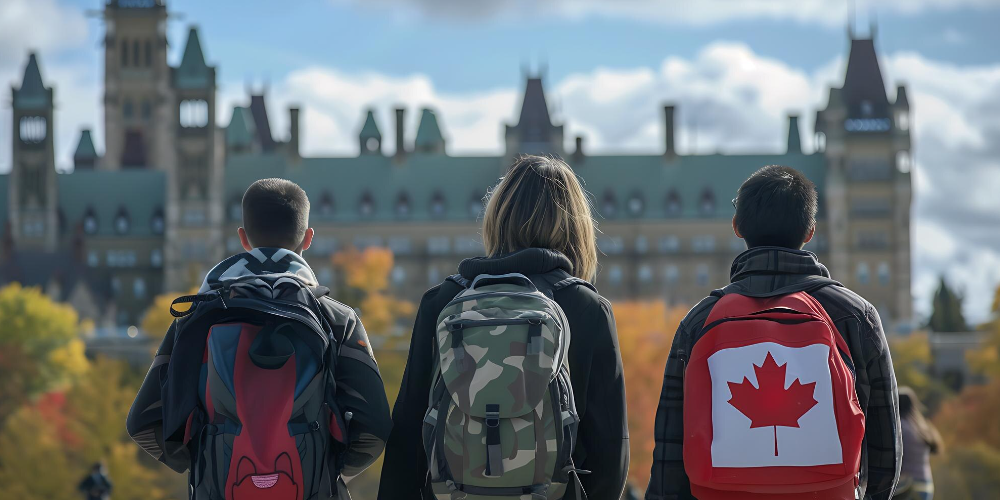




Canada’s Post-Graduation Work Permit (PGWP) program remains one of the most powerful pathways for international students seeking to build a future in Canada. It acts as a crucial bridge between academic learning and real-world Canadian work experience—something that significantly strengthens long-term immigration prospects.
With recent updates introduced by Immigration, Refugees and Citizenship Canada (IRCC) in November 2024 and further refinements in March 2025, the PGWP landscape has evolved. These changes directly impact eligibility, especially regarding the field of study and language requirements.
In this detailed guide, we break down everything you need to know—from eligibility rules to recent updates and how you can successfully apply.
Understanding the PGWP Program
The Post-Graduation Work Permit allows international students who graduate from eligible Canadian Designated Learning Institutions (DLIs) to gain valuable Canadian work experience. This experience is often essential for immigration pathways such as Express Entry in Surrey, BC, which relies heavily on skilled Canadian work experience.
The PGWP is an open work permit, meaning you are not restricted to a specific employer or job role. This flexibility allows graduates to explore different industries and career opportunities across Canada.
Eligibility Rules: Before vs After November 1, 2024
Understanding the timeline of your study program is critical because eligibility rules differ based on when your program began.
Before November 1, 2024
If you started your program before this date, the rules were significantly more flexible:
- No restrictions on the field of study
- No mandatory language test requirements for PGWP eligibility
- Applicable to:
- University degrees (Bachelor’s, Master’s, PhD)
- College diplomas and certificates
- Polytechnic programs
This meant that students from any academic background could apply for a PGWP without worrying about specialization or language benchmarks.
After November 1, 2024
IRCC introduced stricter rules for students beginning their programs on or after this date:
🎓 University Degree Graduates
- No restrictions on field of study (unchanged)
- Must meet language requirements:
- Minimum CLB/NCLC 7 in all four skills (reading, writing, listening, speaking)
🏫 College Bachelor’s and Master’s Degrees
- Initially restricted to specific fields (November 2024 update)
- As of March 2025:
- Field restrictions removed
- Language requirement remains: CLB/NCLC 7
🛠️ Non-Degree Programs (Diplomas & Certificates)
- Must be in an eligible field of study
- Fields include:
- Agriculture
- Health Care
- STEM (Science, Technology, Engineering, Mathematics)
- Skilled Trades
- Transport
- Education
- Language requirement:
- Minimum CLB/NCLC 5
What Changed in March 2025?
The March 2025 update brought a significant and much-needed shift in policy.
Initially, the November 2024 changes limited eligibility for many students, especially those enrolled in college degree programs. These students were required to study within six high-demand fields to qualify for PGWP.
However, this caused widespread concern:
- Many students became unexpectedly ineligible
- Educational institutions faced uncertainty
- Canada risked losing international student interest
✅ March 2025 Update Highlights
- Field-of-study restrictions removed for:
- College Bachelor’s degrees
- College Master’s degrees
- These students now enjoy the same flexibility as university graduates
- Language requirements remain unchanged
This update restored fairness and created a more inclusive system.
Who Still Needs Field-Eligible Programs?
Despite the relaxed rules, some students must still meet field-specific criteria.
You MUST meet field requirements if:
- You are enrolled in:
- Diploma programs
- Certificate programs
- Polytechnic or private institution programs
- Your program started on or after November 1, 2024
Additionally:
- Some university-level certificates (non-degree programs) may also require alignment with eligible fields
PGWP Eligibility Summary
Here’s a simplified breakdown:
- University Degree Graduates
- Field Requirement: None
- Language Requirement: CLB/NCLC 7
- College Bachelor’s/Master’s Graduates
- Field Requirement: None (after March 2025)
- Language Requirement: CLB/NCLC 7
- Non-Degree College/Polytechnic Graduates
- Field Requirement: Must match eligible fields
- Language Requirement: CLB/NCLC 5
- Students Who Started Before November 1, 2024
- Field Requirement: None
- Language Requirement: Not required
Why These Changes Matter
The recent updates are more than just policy adjustments—they reflect Canada’s broader immigration strategy.
1. Expanded Opportunities
College degree graduates now have equal access to PGWP regardless of their field. This aligns their opportunities with those of university graduates and supports pathways such as Canada PR in Surrey, BC where Canadian work experience plays a key role.
2. Improved Policy Stability
Frequent changes in late 2024 created confusion among students and institutions. The March 2025 revision has helped stabilize expectations and restore Confidence in Canada’s immigration system.
3. Focus on Labour Market Needs
By maintaining field requirements for non-degree programs, Canada ensures that graduates contribute to high-demand sectors such as healthcare, trades, and technology.
4. Stronger Immigration Pathways
PGWP is often the first step toward permanent residency. Work experience gained through PGWP helps applicants qualify for:
- Canadian Experience Class (CEC)
- Provincial Nominee Programs (PNPs)
- Family-based pathways like Spousal Sponsorship in Surrey, BC
How to Apply for a PGWP Successfully
Applying for a PGWP requires careful preparation. Here’s a step-by-step guide:
✔️ Step 1: Confirm Your Eligibility
- Check your program type (degree vs diploma)
- Verify your program start date
- Ensure your institution is a recognized DLI
✔️ Step 2: Meet Language Requirements
- Take an approved language test if required
- Ensure you meet:
- CLB 7 (for degree holders)
- CLB 5 (for diploma holders)
✔️ Step 3: Verify Field Eligibility (If Required)
- For non-degree programs:
- Confirm your program aligns with one of the six eligible categories
- Check your CIP (Classification of Instructional Programs) code
✔️ Step 4: Prepare Your Documents
- Completion letter from your institution
- Official transcripts
- Valid passport
- Language test results (if applicable)
✔️ Step 5: Submit Your Application
- Apply online through the IRCC portal
- Apply within 180 days of receiving your final marks
✔️ Step 6: Understand Your Work Permit Duration
- Program length determines PGWP duration:
- 8 months–2 years → permit matches program length
- 2+ years → up to 3-year work permit
This work experience can later support applications for a Work Permit in Surrey, BC, extensions or transitions to permanent residency.
🚀 Strategic Tips for International Students
To maximize your chances of success:
- Choose programs aligned with your long-term immigration goals
- Prioritize strong language test scores
- Gain relevant work experience during and after studies
- Stay updated with IRCC policy changes
- Seek professional guidance if needed. Immigration Immigration Immigration Immigration
🧾 Final Thoughts
Canada’s Post-Graduation Work Permit (PGWP) program remains one of the most attractive opportunities for international students worldwide. The recent removal of field-of-study restrictions for college degree graduates marks a significant step toward inclusivity and fairness.
While language requirements now play a more critical role, the overall system has become more balanced and aligned with Canada’s economic and immigration goals.
With expert guidance from Welkin Immigration, you can better navigate these evolving policies and maximize your chances of success. Whether you aim to gain work experience, transition to permanent residency, or explore long-term settlement options, the PGWP serves as your gateway to success in Canada.